How Can Native Yeast Deepen Opus One’s Connection to the Land?
Read More

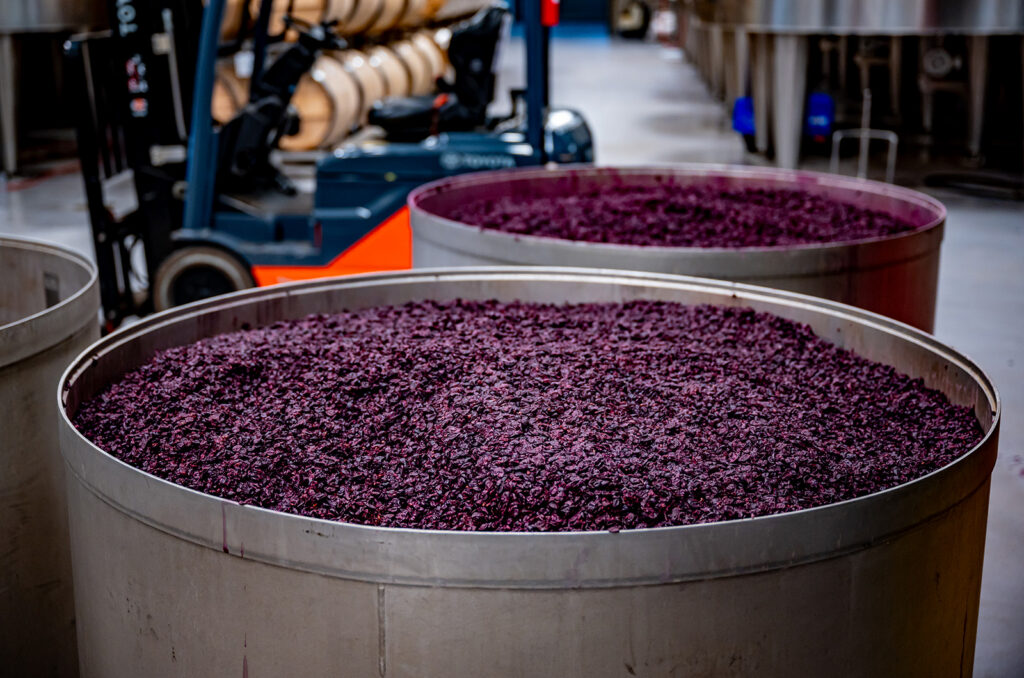
For more than four decades, winemaking at Opus One has been guided by both observation and innovation. The Coquard bucket press, used in the production of Opus One and historically associated with Champagne production, exemplifies this balance.
Its enclosed design allows for a gentle extraction while minimizing unnecessary exposure to oxygen, providing the winemaking team with greater control over the wine’s development and the ability to shape each lot according to our stylistic vision.
Yet technology alone does not guide our decisions. Throughout harvest, every fermentation is tasted daily. These evaluations offer insight into the wine’s evolving structure, texture, and mouthfeel, helping determine the ideal moment for a lot to be drained and pressed.
This year, that judgment has proven especially valuable. Many lots achieved a remarkable sense of completeness after approximately sixteen days on their skins, earlier than is typical for fruit from our Oakville Estate. While analytical measurements continued to provide important context, the wines themselves revealed something equally meaningful: they were already expressing the mouthfeel and balance the team seeks. Relying solely on predetermined analytical targets may have resulted in wines of greater firmness and dryness. Instead, experience, observation, and daily tasting guided decisions, allowing each lot to be pressed at the optimal moment.
The Coquard press supports this philosophy by preserving those qualities through a gentle extraction process, helping carry the character of the vintage from fermentation to barrel with care, precision, and respect for what the vineyard has given.
Shared October 2026